
Islamic Ethics
And
Professional Identity Construction
at The Islamic University:
EFL Teacher Educators’ Guidelines
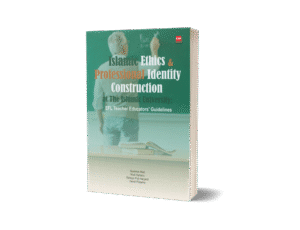
BUKU
Islamic Ethics and Professional Identity Construction at The Islamic University: EFL Teacher Educators’ Guidlines
Penulis:
Nuskhan Abid;
Rudi Hartono;
Rahayu Puji Haryanti;
Hendi Pratama
Editor : Ulfah Mey Lida
Cover design: Nuskhan Abid
Gambar sampul depan: Foto Menara Kudus. Dokumentasi Pribadi Nuskhan Abid
Gambar sampul belakang: Tembok depan Fakultas Ushuluddin UIN Sunan Kudus. Dokumentasi Pribadi Nuskhan Abid.
Harga: Rp 100.000,-
Cetakan I: Maret 2026
Sinopsis
The book “Islamic Ethics and Professional Identity
Construction at Islamic Universities: EFL Teacher
Educators’ Guidelines” by Nuskhan Abid et al. explores
how English language (EFL) teacher educators in Islamic
higher education construct their professional identities by
integrating Islamic ethics. Amidst the currents of
globalization that often separate general knowledge from
religious values, this book asserts that a true professional
identity for educators in Islamic universities is formed
when Islamic ethics serve as a compass in every pedagogical
action.
The following are the main points discussed in this book:
Indigenization of Identity Theory: The authors successfully
“indigenize” Western identity theories through the lens of
the Islamic heritage of the Indonesian archipelago,
specifically using the framework of the book Adabul ‘Alim
wal Muta’allim by KH Hasyim Asy’ari. This transforms the
technical definition of a teacher into an understanding of
educators as spiritual caregivers who guide students with
compassion and patience.
Islamic Ethics in English Language Learning (ELT): This
book explains that integrating religious values into the
English language classroom is not simply the inclusion of
sacred texts, but rather a manifestation of compassionate
pedagogy, fair assessment, and respect for differences.
Teacher educators serve as curators of values and moral role
models (uswatun hasanah).
Navigating Identity Conflicts: An in-depth discussion
explores the challenges EFL lecturers face in filtering
Western cultural content that may conflict with Islamic
ethics. Lecturers are required to balance global professional
standards with local ethical and religious constraints.
Practical Guidance and Self-Reflection: This book provides
constructive self-reflection tools for junior and senior
lecturers to evaluate their professional practice based on
dimensions of Islamic ethics, such as muraqabah
(awareness of Divine supervision), ikhlas (sincerity), and
tawadhu (religious tolerance).
Recruitment Model and Standardization: The authors
propose a lecturer recruitment model that focuses not only
on TOEFL/IELTS scores but also captures aspects of
professional piety and nurturing character. Furthermore,
this book encourages educator standardization that
combines global linguistic proficiency with local moral
integrity. Overall, this book is a comprehensive guide that
aims to produce graduates who are not only globally
proficient in English, but also possess a strong moral
compass and a moderate Islamic identity.
Diterbitkan
Hak Cipta Dilindungi Undang-undang
Isi buku ini, baik sebagian maupun seluruhnya, dilarang diperbanyak dalm bentuk apapun tanpa izin tertulis dari penerbit, kecuali dalam hal pengutipan untuk keperluan penulisan artikel atau karangan ilmiah.
Penerbit CV. Sinar jaya Mandiri Kudus
Pasuruhan Lor 01/01, Jati, Kudus
081266374481